Guidance at the moment it’s needed
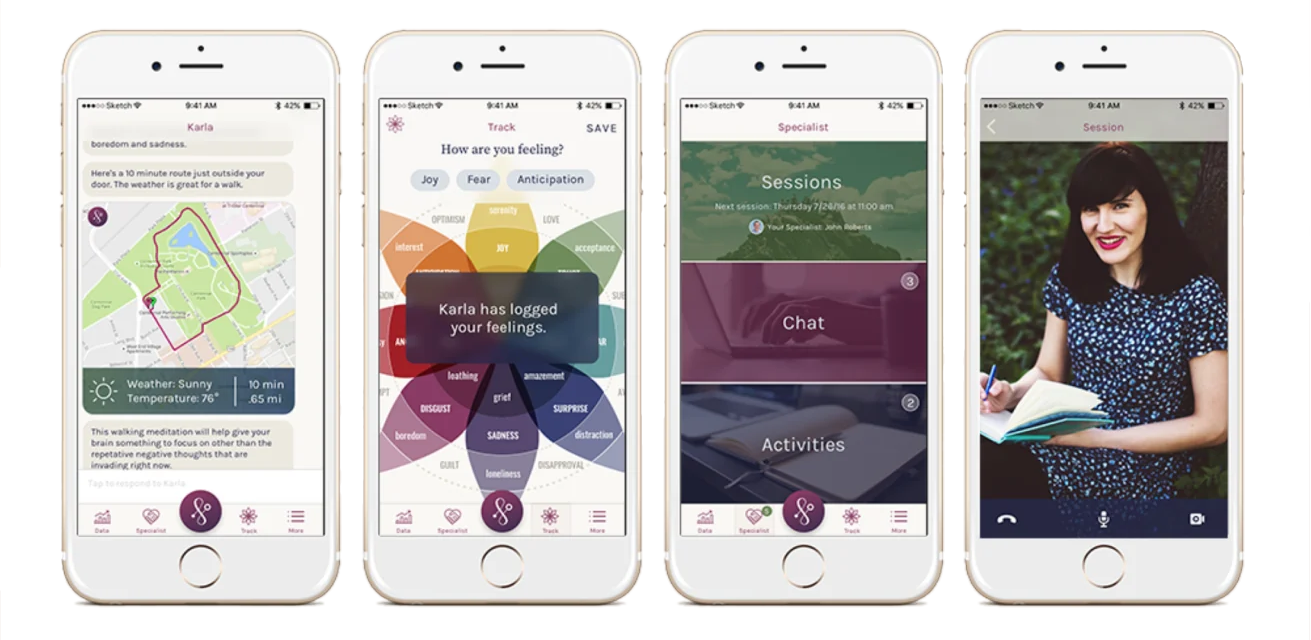
Synchronous Health is a behavioral healthcare platform that looks for patterns in people’s behavior. It has two parts: Karla, a companion app for patients, and a web portal for their licensed therapists.
Kind, passive support
I’d worked with members of the Synchronous Health team before, on a project about passive data collection and health visualizations, so this move into behavioral health was a natural next step.
We worked through many rounds of wireframes to find the core features that would help people screen, measure and track their mental health. Care had to feel kind and passive, so copy and notifications gave useful information without intruding, and both the app and the web portal were designed to earn people’s trust.
Support that fits between sessions
In the U.S. there’s only one mental health provider for every 198 people who need one, and therapy happens in scheduled sessions. Synchronous Health set out to extend care into the many hours of each week when participants and specialists can’t be together.
Help in the moment
Most of the week happens between sessions. Karla had to be there in those hours, with questions, suggestions and follow-up at the right time and place.
Perspective over time
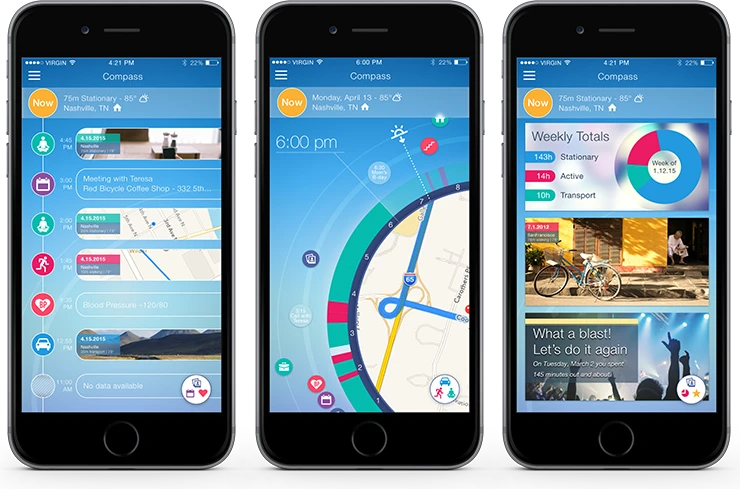
Karla passively picks up time, place and known triggers from a participant’s phone, so patterns form without manual logging and carry into each session.
Extending human care
Karla was designed to support counseling, never to replace it. She had to stay focused on each participant’s care plan and give specialists a real-time account of how her support was working, so their limited time went further.
Emotion logging
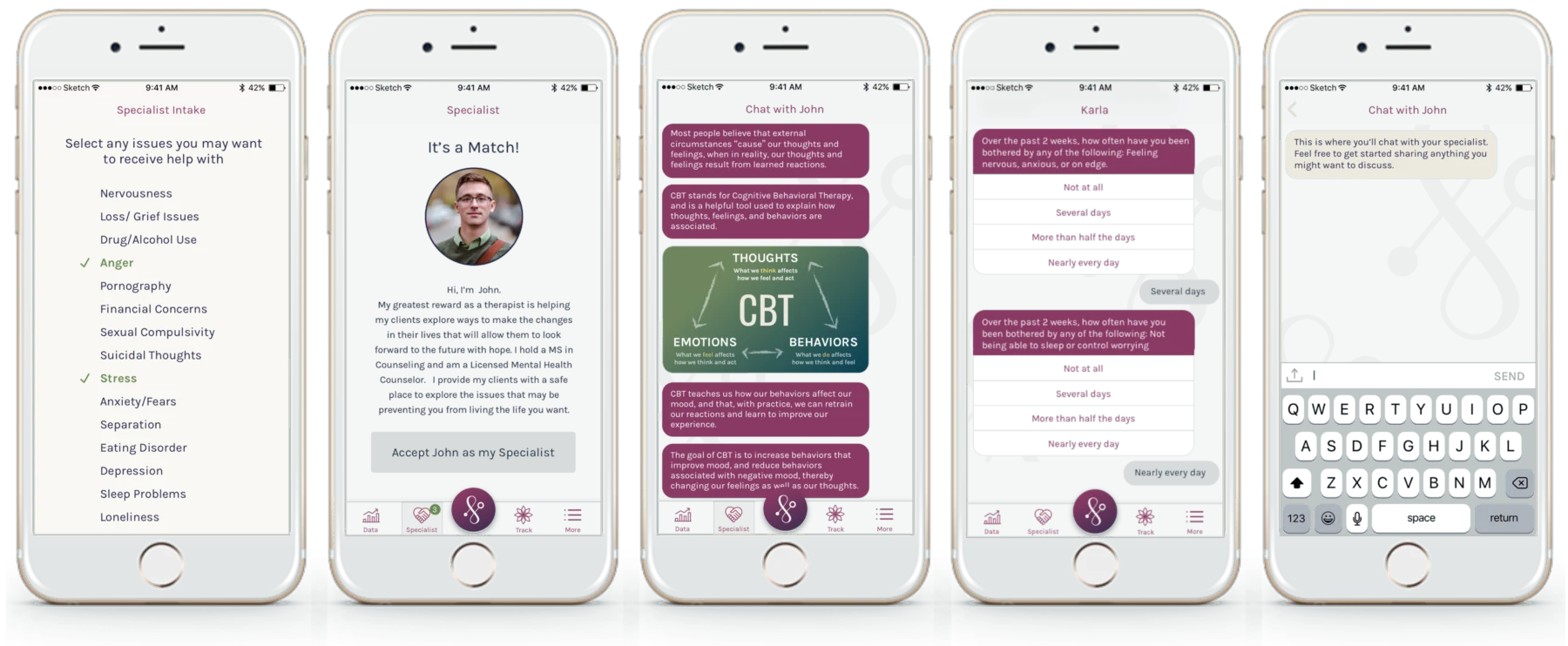
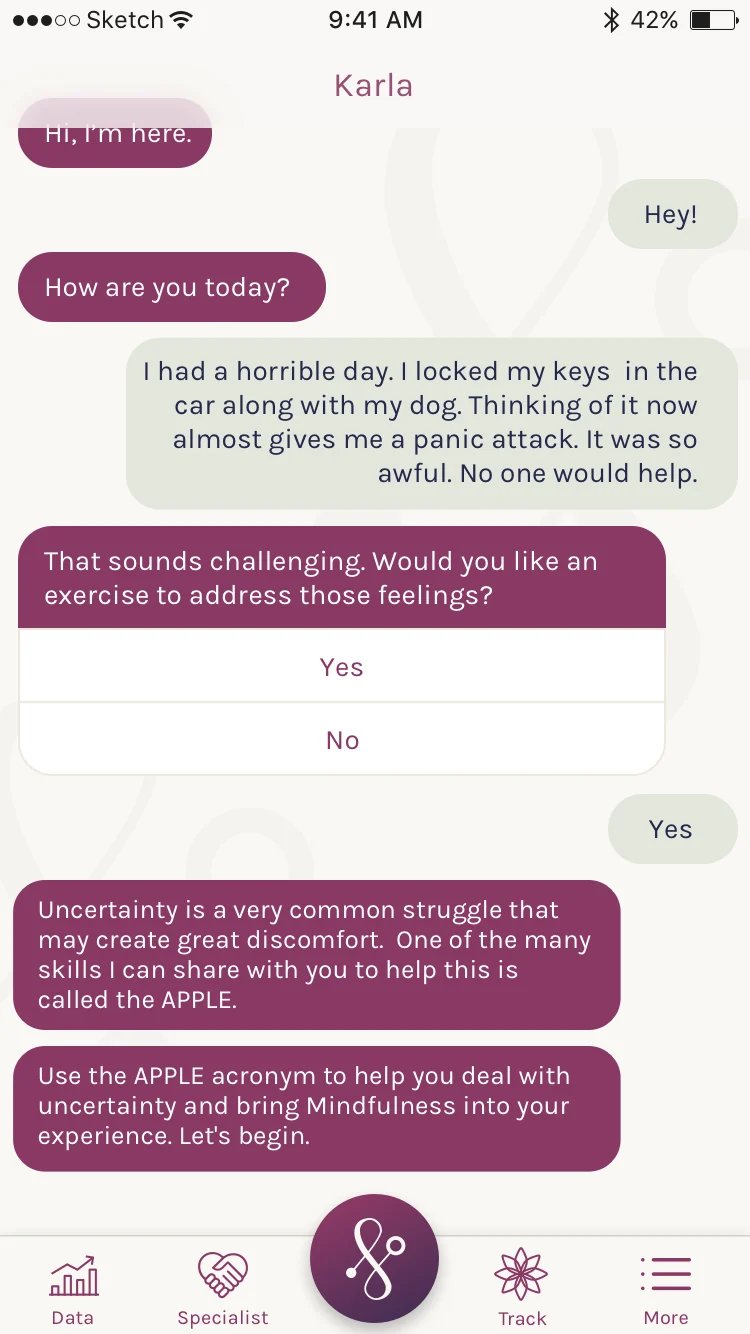
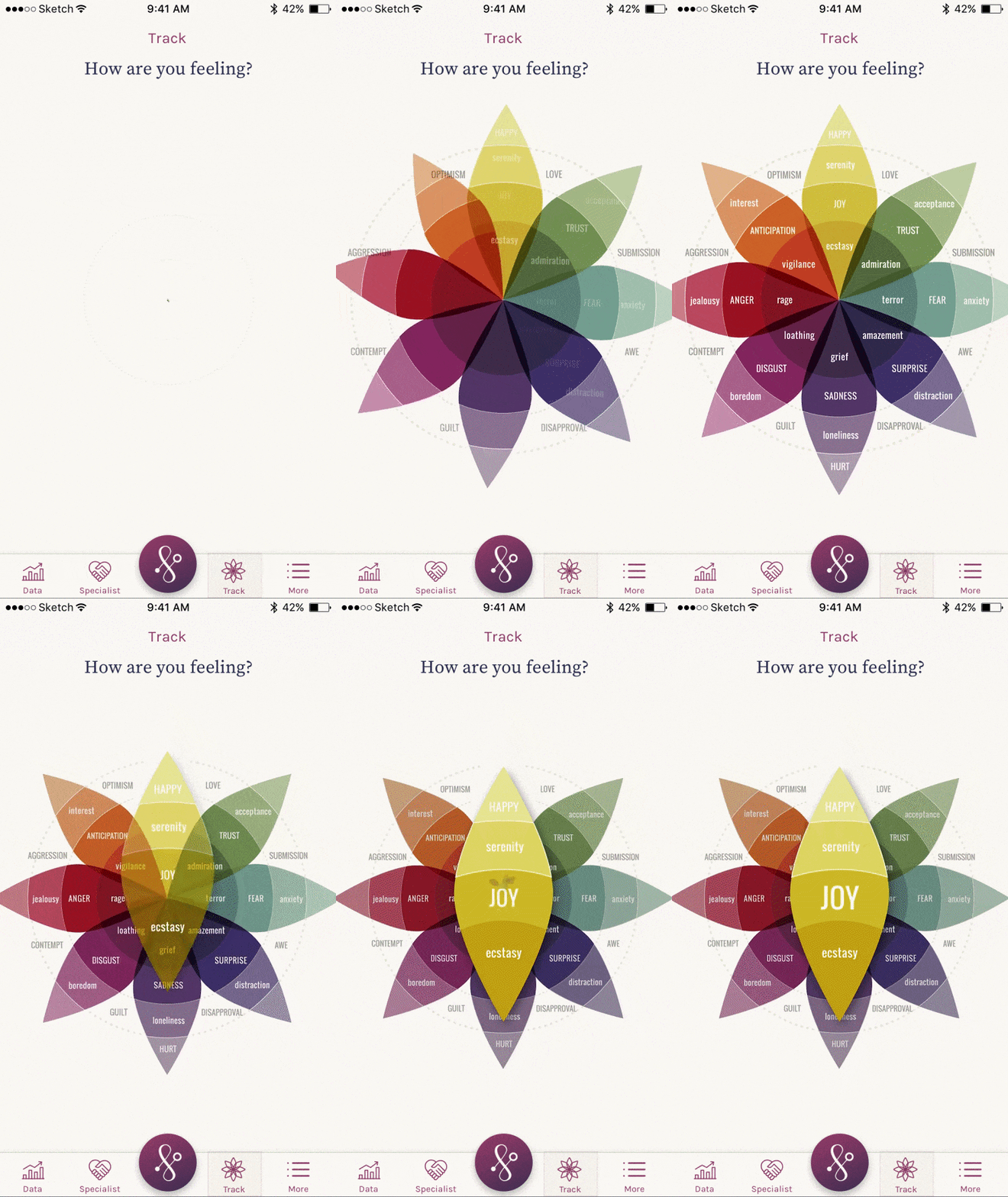
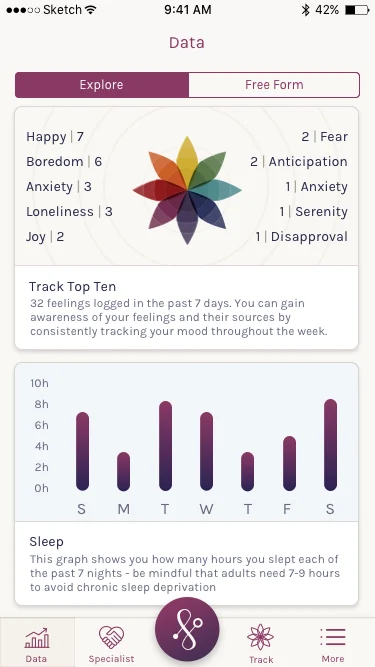
Karla is a chat companion that checks in, answers questions and offers a listening ear. People can explore their habits at any time through data cards and an interactive Plutchik wheel, and the feelings they log give specialists talking points for their weekly or monthly telehealth sessions.
Objective data for contextual support
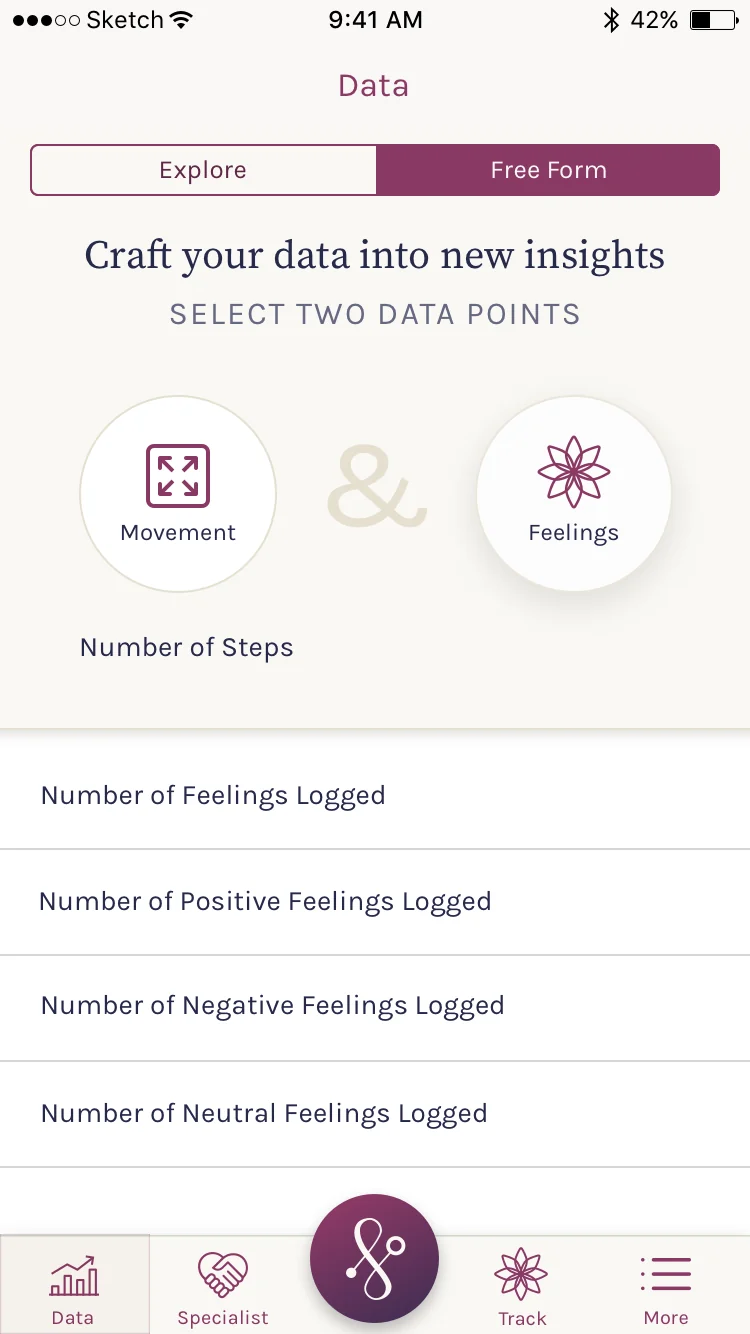
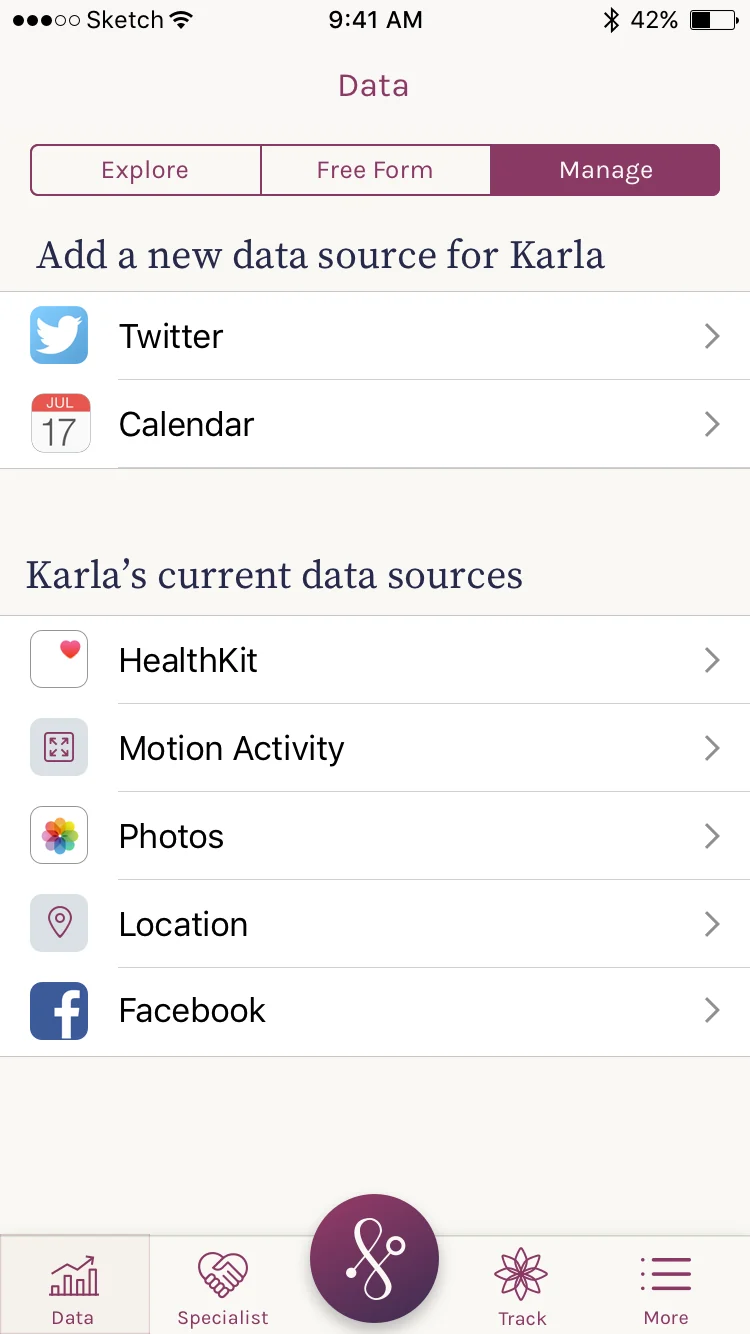
Alongside the conversation, Karla passively collects data from sources like voice, location, calendar and device use, then runs it through custom algorithms. Karla uses the results to add context to its support. Specialists can also get alerts about risky locations or behaviors, so they can reach out when their client needs it.
A human in the loop
Alongside the app, I designed the web platform specialists use to review their clients’ data, assign activities and keep in touch between sessions.
A user can opt to match with a human-support specialist in addition to Karla. Through a custom pairing process, Synchronous Health works to match the user with the specialist best suited to their needs. Specialists can be available to chat, assign activities, or program Karla to provide better asynchronous support.